The Handwriting I Didn't Ask For: What Secondhand Books Confess
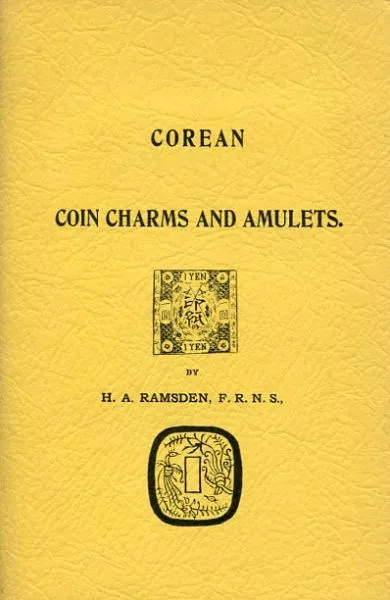
Photo: Unknown Korean author(s) of the coin charms, text too simple for copyright., Public domain, via Wikimedia Commons
There is a used bookstore in my neighborhood with a shelf near the register marked Signed & Otherwise. The otherwise is doing a great deal of quiet work. It's where they put the books that have writing in them — inscriptions, names, a phone number, a prayer, a grocery list on the back of an envelope. Most people walk right past that shelf. I go to it first.
Last spring I brought home a paperback copy of Wallace Stegner's Crossing to Safety for four dollars. On the title page, in blue ballpoint, someone had written: "For Ruth — who keeps going. Love, M. Christmas 1991."
That's the whole message. No explanation, no sequel. Thirty-five years of silence on either side of it, and I have been thinking about Ruth and M. ever since.
The price in pencil
There is always a second hand after the first. On the inside cover, in pencil, the store's own mark: $4.00. Beneath it, faded, someone had written $1.50 and crossed it out. Beneath that, the ghost of a sticker from a library sale in a church basement — the kind where everything is a dollar and the volunteers are cheerful and slightly deaf and genuinely sorry you're only buying one.
So the book had a life before Ruth, or after her, or both. It passed through at least three sets of hands and one institutional basement before it landed in mine. I paid four dollars for a book and got a small archive.
What people underline when they think no one is watching
Ruth, or whoever read this copy, was a light underliner. Never a whole sentence. Just a phrase here and there, in the same blue pen, as if she didn't want to interrupt the paragraph.
On page 84: the terrible mercy of ordinary days. On page 211: he was a man who kept his promises in small denominations.
I don't know if those lines are as good as they seemed to her at the time, or if they seemed good because of where she was sitting when she read them — a kitchen table, a hospital corridor, a parked car outside a house she didn't want to go into. Underlining is a form of witness. It says: this happened to me here.
There's a difference between a book someone owned and a book someone read. You can tell within ten pages. The owned ones are crisp and upright and slightly offended to be touched. The read ones have a broken spine, a coffee ring, a corner turned down at the exact page where the reader needed to stop.
The conversation I wasn't invited to
Halfway through, tucked into the back endpaper, I found a phone number in pencil, mostly erased but still legible if you tilt it toward the light. No name. No area code I recognize.
I have never called it. Obviously I have never called it. But I've thought about it more than I'd like to admit — the specific temptation of a stranger's number in a book about two marriages and one long friendship and the slow arithmetic of who stays.
I've decided the number isn't a mystery to solve. It's a door left ajar by someone who assumed no one would ever walk through. Reading other people's inscriptions is a little like overhearing a phone call in a restaurant: you know you should look away, and you don't, and then you feel strange for the rest of the meal.
Every used book with writing in it is a conversation between two people who are, statistically, no longer both alive. I'm not being morbid. I'm being precise. When I open a book that says For Ruth, I am holding the last surviving evidence of a gift, and the gift was specific: you are the one who keeps going.
Inheriting the affection
Here's the part I didn't expect. I read the Stegner differently than I would have read a clean copy. Not better, exactly — more carefully. Somewhere around page 150 I caught myself wanting to like it on Ruth's behalf, the way you want to like a friend's favorite restaurant even when the food is fine.
That's what secondhand books actually sell: not paper, but inherited affection. You buy someone else's four decades of loyalty for the price of a sandwich. You get their underlinings, their bookmark, their opinion of chapter nine, and, if you're lucky, one line of handwriting that tells you exactly how they felt about the person who handed it to them.
I've started to think of my shelves as a very crowded, very quiet party. Half the guests arrived before I did and will never be introduced. They're all still standing near the punch bowl, holding their coats, saying something lovely to somebody.
What I do with them now
I don't erase anything. I don't buy the clean copies when I find them, and I don't try to track down Ruth.
What I do is small and slightly sentimental: on the inside cover, below the bookstore's pencil, I write my own name and the month and year, in pencil, softly, the way you'd leave a note for a houseguest. A courtesy. A line in a register.
Because someday this book will cost a dollar in a church basement somewhere, and someone will tilt it toward the light, and there will be a small chain of us — Ruth, M., the person who wrote $1.50, me — all having loved the same set of pages, all having said so in the same narrow margin.
That isn't a ghost story. That's just a library, being a library.