The Wrong Book, Every Christmas: On Being Loved Badly and Well
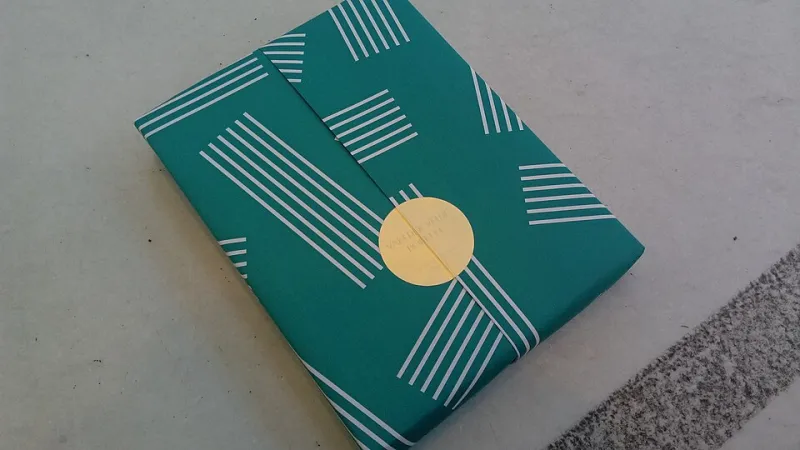
Photo: Donald Trung Quoc Don (Chữ Hán: 徵國單) - Wikimedia Commons - © CC BY-SA 4.0 International.(Want to use this image?)Original publication 📤: --Donald Trung 『徵國單』 (No Fake News 💬) (WikiProject Numismatics 💴) (Articles 📚) 22:20, 16 June 2019 (UTC), CC BY
Every December, without fail, a package arrives from my friend Dana. I can tell it's from her before I open it because of the way she wraps things — roughly, with too much tape, like the object inside might escape. And inside, every year, is a book.
And every year, the book is wrong.
Not slightly wrong. Spectacularly, almost impressively wrong. I write literary fiction and quiet essays; I have a shelf organized by emotional register. Dana has given me a history of the American railroad system, a thriller about a Navy SEAL turned beekeeper, a cookbook for people who hunt their own game, and one year — I still don't fully understand this — a business book about leverage. Not metaphorical leverage. Actual negotiation leverage.
Twelve Years of Misses
I want to be clear: Dana is not a careless person. She's a nurse in Columbus, she runs marathons, she remembers my mother's birthday. She is attentive in every other dimension of our friendship. Which makes the books stranger, not less strange.
For years I assumed she just didn't read my work. That stung a little, the way it stings when someone you love orders you the wrong meal and doesn't notice. I'd smile, thank her, put the railroad history on the shelf between the beekeeper thriller and the game cookbook, and go on with my life.
Then one December, maybe seven or eight years in, I actually read the inscription. Most of her inscriptions are short — "Merry Christmas, don't hate me" — but that year she'd written something longer. It was on a book about lighthouse keepers, of all things. She wrote: "I saw this and thought of the summer we drove up the coast and you wouldn't stop talking about how much you wanted to see one. I know it's not really your thing. But I remembered."
I sat on my floor and cried a little, which I realize sounds dramatic for a book about lighthouses. But something shifted for me in that moment.
The Books Weren't the Point
Here's what I understand now, twelve railroad histories and lighthouse books later: Dana's gifts were never about matching me with a book. They were a clumsy language. She's not a person who says tender things easily — ask her to say something nice at a birthday dinner and she'll deflect with a joke about the guacamole. But hand her a book that reminded her of a drive we took in 2011, and she's said something she couldn't say out loud.
The books are wrong for me as reading material and right for me as messages. The beekeeper thriller wasn't a recommendation. It was "I thought of you at the airport." The leverage book was "I'm proud of you for the new job." The cookbook was, I suspect, "I don't know what you like but I like you."
We talk a lot — in this corner of the internet especially — about being known. The dream of every reader and writer is to be deeply, precisely understood. Find my people. Match me with the exact right book at the exact right moment. There's an entire industry built on that promise.
But Dana has taught me there's another kind of knowing, the imperfect kind. She knows me the way you know a house you've lived in for twenty years — where the light falls, which step creaks — not the way an architect knows it from blueprints. Her gifts aren't precise. They're honest. And honestly, sometimes a lighthouse book that misses is worth more than a perfectly algorithmic match that doesn't miss, because a miss means a person was guessing, reaching, thinking of you without a system to help.
Learning to Receive
It took me an embarrassingly long time to learn how to accept these books gracefully. Early on, I did the polite deflection — the warm thank-you, the quick change of subject. Later, I overcorrected and told her, gently, what I actually liked, which I now recognize as a small act of arrogance. As if the gift were a failed transaction instead of a letter.
These days, when the taped-up package arrives, I do something better. I read the inscription first. I text her a photo of the cover with something dumb like "BEEKEEPER THRILLER, she knows me so well," and she texts back a thumbs up and a GIF, and that's the whole exchange, and it's enough.
And here's the thing I didn't expect: some of the wrong books have become right. I read the lighthouse one, cover to cover, the winter my father was sick, because it felt like holding something of hers. I read the railroad history on a long flight and loved it, genuinely, against every expectation. The beekeeper thriller remains terrible. I will never get rid of it.
So if someone in your life keeps handing you books that miss the mark — keep them. Keep the miss. Somewhere in the wrongness is a sentence the giver couldn't write, wrapped in too much tape, mailed from Columbus, arriving every December like clockwork.
The right book tells you a story. The wrong book, given with love, tells you something better: I was thinking of you, and I got it a little wrong, and I'll try again next year.
That's not a reading life. That's a friendship.