The Same Book, a Different Person Holding It
I want to tell you about the winter I betrayed my favorite book.
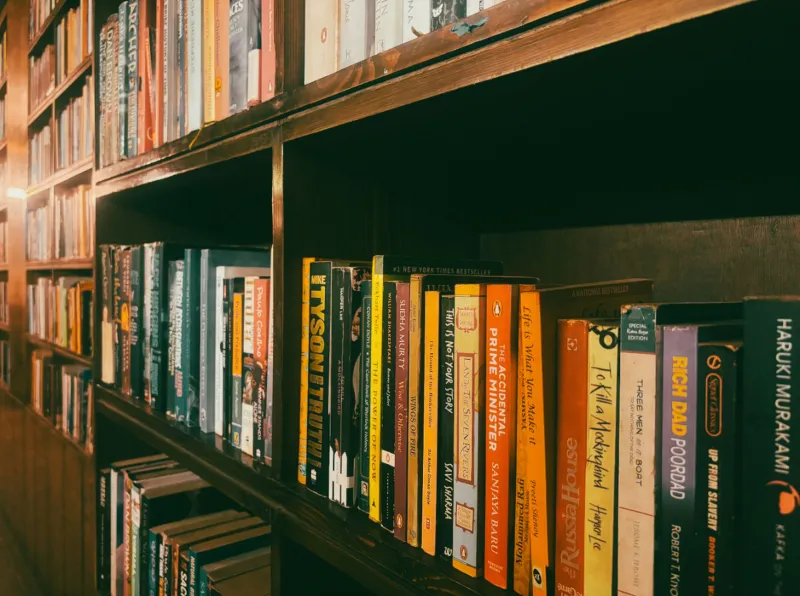
It was a January — you know the kind. Gray light by 7 a.m., gray dark by 4:30, the whole country feeling like it had been left in a waiting room. My father had been in the hospital since Thanksgiving. My novel-in-progress sat untouched in a folder I was afraid to open. And one night, unable to sleep, I pulled an old paperback off the shelf: the book I had loved more than any other for twenty years. I'd read it six times. I could quote the opening paragraph.
I expected it to work like a hand on the shoulder. Instead, it felt like running into an old friend who didn't recognize me.
The book hadn't moved. I had.
Here's what nobody warns you about rereading: you are not returning to the book. The book is returning to you. The sentences are the same, but you are a different reader standing in front of them, and some of the words simply won't reach you anymore.
The passages that had wrecked me at twenty-five — the big dramatic moments, the beautiful grief — barely registered. I kept waiting to feel the thing I remembered feeling, the way you wait for a song to hit its chorus. It never came.
Instead, I found myself stopped cold by a single unremarkable sentence in the middle of chapter four. Something small about a character making dinner alone and deciding not to be sad about it. I'd read that sentence five previous times and never once noticed it. Now I read it four times in a row, and then I closed the book and cried in a way the big dramatic scenes never managed to produce.
The book had been keeping a message for me, and I hadn't been ready to receive it until I was.
Books as timestamps
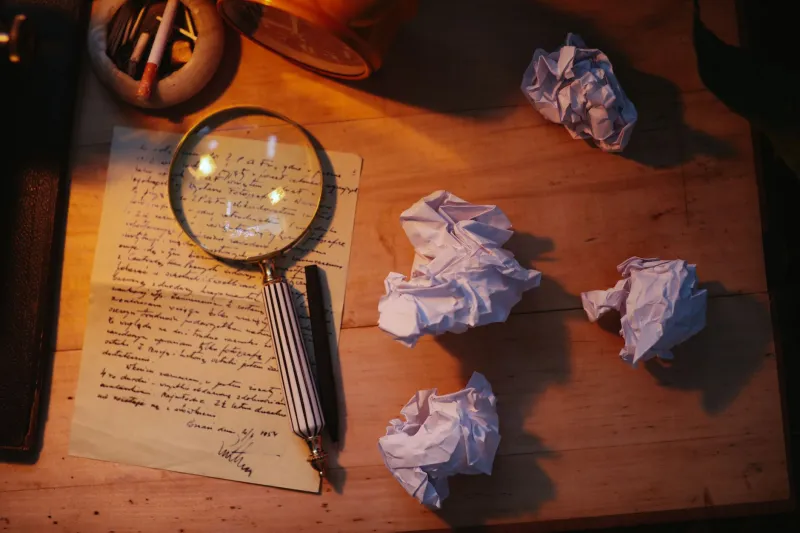
I think this is the part that unsettles people about rereading during hard seasons: the book becomes a mirror of your own timeline. Every annotation, every dog-eared page, every margin note in a younger version of your handwriting — it's a letter from a former self you may not want to hear from.
My margin notes from twenty years ago were confident. Cocky, even. Little arrows and exclamation points, as if I'd figured the whole book out. The person who made those notes had no idea what was coming — not the hospital waiting rooms, not the stalled manuscript, not any of it. I almost resented him a little, that younger reader with his certainty.
But then I realized what he'd actually done. He'd loved this book enough to keep it. He'd put it back on the shelf in good condition, spine intact, trusting that someday somebody would need it. That somebody turned out to be me, at 3 a.m., in the worst January of my life.
The right book at the wrong time
We talk a lot about the right book arriving at the right moment, as if reading is a matter of cosmic scheduling. But I've come to believe the more common experience is stranger: the right book at the wrong time. A book you love that has temporarily gone mute on you. A comfort that doesn't comfort.
If that's happened to you, I want to offer a small mercy: it isn't the book's fault, and it isn't yours. Meaning in reading is a collaboration, and one of the collaborators was briefly out of the room. Put the book down without guilt. The sentences will wait. They're better at waiting than we are.
What I finally did — after a few false starts — was stop trying to reread it the way I had before. I read it slowly, ten pages a night, like taking a medication. I let it be a different book than the one I remembered. And somewhere around chapter nine, it stopped feeling like a stranger and started feeling like something better: a witness. It had seen me at twenty-five. Now it was seeing me at this. That's not one book. That's a whole correspondence.
What this has to do with writing
I'm filing this under craft because it changed how I think about my own pages. If a reader meets my book in a hospital waiting room, or a moving truck, or the first week of a new job in a city where they know no one — that meeting is out of my hands. I can't write for the moment they'll need it. I can only write the kind of book that keeps well, the way my old paperback kept well: honest enough that a future reader, unrecognizable to me, might find an unnoticed sentence waiting in chapter four.
That's the whole job, really. Write sentences worth discovering twice.
My father came home in March. The book is back on the shelf, spine a little softer now, a new set of margin notes in wearier handwriting. Someday I'll read it again, and it will change again, and so will I.
That's the deal we make with the books we love. They agree to stay the same so we don't have to.