Thirty Days of Sounding Like Other People
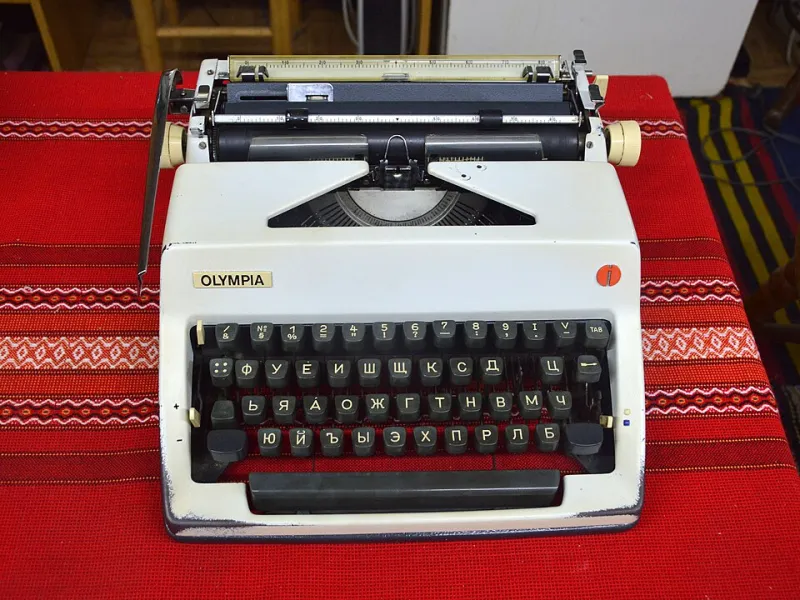
Photo: Dimitǎr Boevski, CC BY-SA 4.0, via Wikimedia Commons
There's a game every writer plays at least once, usually alone, usually a little embarrassed: write a paragraph that could fool someone into thinking it came from your favorite author. I'd played it in the margins of notebooks for years — a Joan Didion sentence here, a Anne Lamott aside there. But this past spring I decided to make it official. Thirty days. Four writers. One week each, no cheating, no slipping back into my own rhythms when the going got awkward.
The rules were simple. Each morning I'd write five hundred words on whatever was actually happening in my life, but filtered through the voice of the week. Not fan fiction, not pastiche for its own sake — the real material of my days, wearing borrowed clothes. And I have to tell you: it was the most instructive month of writing I've had in years.
Week One: The Long Sentence People
I started with a writer known for sentences that go on like a Nebraska highway — clauses stacked on clauses, digressions that circle back three paragraphs later to land a punch you didn't see coming. Writing like this felt glorious for about two days. The sentences were generous. They made room for everything.
By day four I was exhausted. I'd spent forty minutes on a single sentence about my dentist's waiting room, and when I finally got to the period, I realized I'd said nothing I couldn't have said in twelve words. But here's what stuck: the ambition of that voice. My natural sentences are short and a little skittish. I end thoughts before they've fully bloomed. Writing long taught me that half my ideas die of premature punctuation.
Week Two: The Minimalist
Then came the opposite. A writer of two-word paragraphs. Dialogue that does the work of description. I wrote a scene about an argument with my sister in which I was allowed maybe forty words total, and I wanted to scream.
But something interesting happened. Stripped of my usual hedges — "sort of," "I suppose," "in a way" — the argument got sharper. Truer. My first draft of anything is padded like a kid in a snowsuit, and this week was the winter I finally took the snowsuit off. The paragraph I'm proudest of this year came out of that week: six sentences about my father's hands, and not one of them trying to be beautiful.
Week Three: The One Who Makes Me Jealous
Week three was the writer I've envied longest — the one whose humor is so dry it's practically a climate, who can break your heart with a parenthetical. This was the hardest week, and the most revealing. Every attempt came out as caricature. I was doing an impression, the way you do a friend's laugh at a party and everyone winces.
Because here's the thing I finally understood: what I love in her work isn't the jokes. It's the control — the sense that every word survived a culling. I can't steal the control. I can only earn it.
Week Four: The Confessor
The last week belonged to a writer who tells you everything — the affairs, the debts, the ugly thoughts at funerals. I wrote about money. I wrote about a friendship I let rot. I wrote things I have no plans to publish, and the borrowed voice gave me permission I didn't know I needed.
What I Kept
Here's the funny part. The sentences that felt most stolen — the ones where I thought, this is pure larceny, this isn't me at all — taught me the most. Because voice isn't the thing you can't escape. Voice is what's left after you've tried on everything else and sent most of it back.
When I reread the month, my own voice kept bleeding through like a watermark: in what I chose to notice, in what I refused to say, in the jokes that surfaced even in the minimalist week. Influence isn't a costume. It's a fitting room. You try on a lot of things. You buy maybe one item, and it changes how everything else in your closet looks.
If you write, I'd encourage the experiment. Pick four writers who make you jealous. Spend a week in each one's skin. The goal isn't to sound like them. The goal is to find out, with real precision, what it feels like when you sound like you — because you'll finally have something to compare it to.