Three Years, Two Moves, One Unreturned Library Book
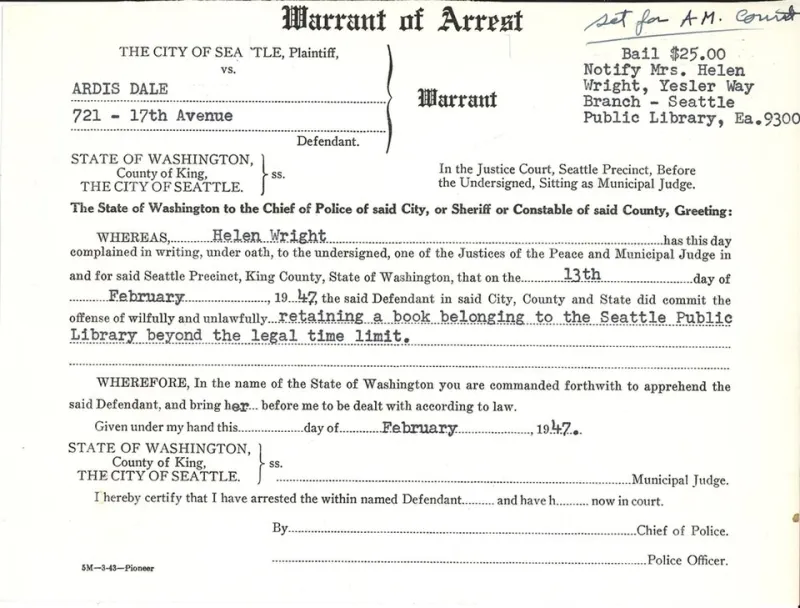
Photo: Seattle Municipal Archives from Seattle, WA, CC BY 4.0, via Wikimedia Commons
The fine stopped mattering somewhere around the eight-dollar mark. What started as a dollar-fifty on a paperback copy of Stoner by John Williams — checked out from the Licking County Library branch in my hometown, back when I still visited my parents monthly — grew into something stranger. Not a debt. A relationship.
Let me back up.
How It Started
I borrowed Stoner in the fall of 2019 because a writer I admired mentioned it in an interview, and I was in one of those phases where I buy the books other writers recommend and feel instantly more literary. I read maybe forty pages at my parents' kitchen table, and then I drove back to Columbus, and the book rode along in my passenger seat like a hitchhiker I forgot to drop off.
Then 2020 happened. The library closed. My office closed. The book sat on my nightstand through all of it, its due date expiring quietly in a system that had stopped keeping track, or at least stopped chasing.
The Book as a Placeholder
Here's the confession part: I didn't finish it. I didn't even come close. But for three years, that book did something for me that finished books don't do. It sat there being possible. Every time I dusted the nightstand, I thought, soon. Every time I moved — once to a smaller apartment, once across town — I packed it in the same box as my chargers and my grandmother's letters. Essentials, apparently.
I think we all have books like this. Not the ones we loved, but the ones we meant to love. The borrowed ones are worse, because they come with a clock. A book you own can wait forever. A library book is a small standing appointment with a version of yourself you haven't become yet — the version who reads John Williams in an afternoon, who has opinions about mid-century academic novels at dinner parties.
Keeping it overdue was a way of keeping that version alive.
What the Fine Actually Bought Me
I want to be honest about the psychology, because I think it's commoner than anyone admits. The fine wasn't punishment. It was rent. A dollar here, a dollar there, paid in embarrassed installments whenever I logged into my account and saw the number climbing. Rent on a small room in my imagination where I was still the reader I planned to be.
My friends with library cards in good standing didn't understand. "Just take it back," they said, the way you'd tell someone to rip off a bandage. But taking it back meant checking it in. Checking it in meant the experiment was over, and the data was in: I had borrowed a book about a quiet man's unlived life, and I had, fittingly, not lived the life where I read it.
The Return
It finally happened on a Tuesday in early 2023. The library had reopened, my account had a hold on it, and I walked up to the desk with the book — water-warped slightly from a bathroom incident I won't detail — and handed it over like returning a borrowed sweater after a breakup.
The librarian didn't care. That's the thing nobody tells you. She scanned it, said the fine had been capped, and asked if I wanted to check anything out. I said no. I walked to my car and sat there for a minute feeling oddly bereaved.
Then I bought my own copy. I finished it that summer, on a porch, in three sittings. Turns out the book was good. Turns out it was never about the book.
What I'd Tell You
If there's a craft lesson in here, it's this: the books we don't finish teach us as much as the ones we do. They show us where our actual reading life diverges from our aspirational one. The gap between those two is where most of us live, and there's no shame in it — but there is something liberating about closing the account.
So here's my assignment, if you want it: find your overdue book. The physical one or the metaphorical one. Return it, forgive the fine, and then — only then — decide if you actually want to read it. Some of them you will. Some of them you won't. Either answer is fine.
The library, I'm told, forgives. Eventually, so should we.