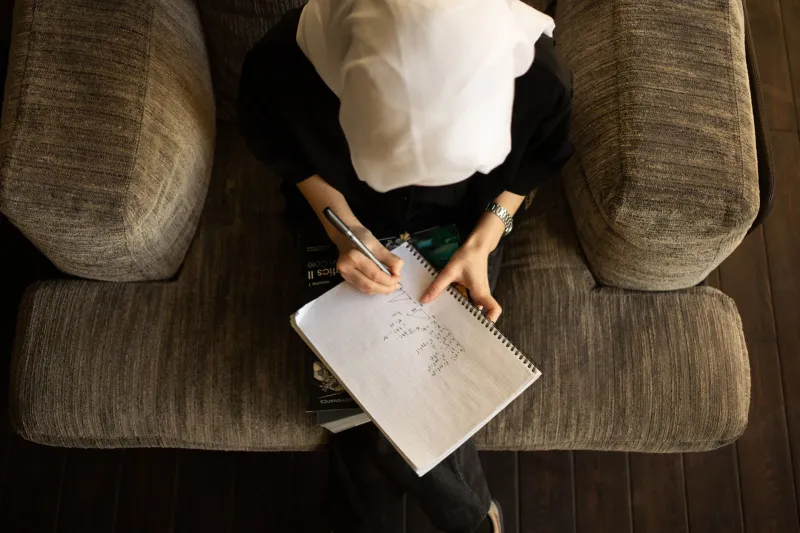
The Truth Hides at the Bottom of the Page
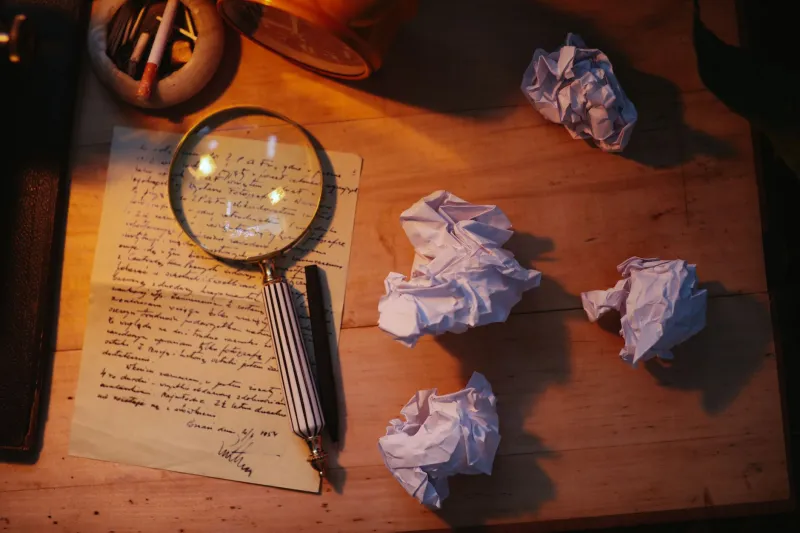
My grandmother signed every letter the same way: Love, Ruth. Then, without fail, three lines below, in smaller and slightly more frantic handwriting: P.S. Don't tell your mother about the money.
I have thought about those postscripts for most of my adult writing life, and I've come to believe something that sounds a little superstitious until you test it against your own work: the truest thing you have to say almost never arrives on schedule. It shows up late, out of breath, after the performance has already ended.
The P.S. as a Confession Booth
There's a practical reason the postscript works this way. By the time you've written Sincerely and signed your name, the letter is officially over. The stakes have collapsed. Nobody is grading the P.S. It's the one part of any document — letter, email, essay, eulogy — where you're allowed to be loose, because you've already done the thing. The formal obligation is met. Whatever comes after the signature is a bonus, and bonuses don't get edited.
Writers have known this forever, even when they didn't have language for it. Think of how many novels you've read where the last chapter is the only one that feels earned — where the author finally stops building the machine and just tells you what the machine was for. Fitzgerald rewrote the ending of The Great Gatsby more times than almost any other page of that book, and what he landed on wasn't plot at all. It was a confession: that the whole story was really about a man boats against the current. That's not an ending. That's a P.S. wearing a tuxedo.
My Drafts All Bury the Good Part
I started noticing the pattern in my own work about five years ago, when I began saving every draft instead of deleting them. (A hoarding habit I recommend, by the way, if only for the archaeology.)
Here's what I found, over and over: the final paragraph of draft one is usually the first paragraph of draft three. The essay I meant to write would run for 1,400 words, and then, exhausted, I'd tack on a little coda — an aside, an admission, something that started with "anyway" or "the other thing I never said." That coda was the essay. Everything above it was the runway.
Once I saw it, I couldn't unsee it. The piece I wrote about my father's workshop? The real point showed up in the last ninety words, after twelve hundred words of scene-setting. The essay about moving out of our house in Ohio? Buried in the closing line, almost as an apology. I had spent the whole piece performing the feeling, and then at the very end, when I thought the reader had stopped watching, I felt it.
Why We Save Honesty for Last
I don't think it's cowardice, exactly. I think it's pacing.
Honesty requires that we stop managing the reader's impression of us, and managing is what the body of any piece is for. We open with a hook. We structure. We cut the boring parts. All of that is a kind of hostessing — fluffing the pillows, making sure everyone has a drink. You can't confess anything real while you're still holding the tray.
But at the end, the tray goes down. The signature is written. And suddenly there's nothing left to protect, so the hand writes the thing it's been circling for a thousand words.
Comedians understand this instinctively. The best jokes in any late-night monologue are the ones told after the formal bit is over, off-script, at the desk. Talk show hosts call it the back-half. Letter writers call it the P.S. Novelists call it the last line. Different rooms, same door.
How to Use This Without Abusing It
Now, a caution, because craft advice without a caution is just a slogan: you cannot fake the postscript. Readers can smell a manufactured intimacy the way they can smell a candle trying to cover cigarette smoke. The trick isn't to write a P.S. The trick is to write until the performance runs out of gas, and then keep the pen moving for one more paragraph.
A few things that have helped me:
Write past the ending. When you feel the piece wrap up, write one more paragraph you intend to cut. It usually isn't cut. It's the point.
Read your last paragraphs first. Flip the draft over. If the ending is more alive than the beginning, you've found your real opening. Move it. The runway can be rebuilt around it.
Keep the asides. "Anyway," "one more thing," "I should mention" — these are not filler. These are your subconscious tapping the mic.
Let the signature come earlier. In letters, in emails, in essays — say your goodbye, then see what your hand does. My grandmother's P.S. Don't tell your mother about the money was more honest than anything in the body of those letters. It was also, I'd argue now, the part I'd keep.
The Line After the Line
I've come to think of every piece of writing as a house party. The body of the essay is the evening — guests arriving, conversation, the careful choreography of being a person among people. And the postscript is what happens at 1 a.m., when one guest lingers in the kitchen and says the thing they came to say.
You can't schedule that moment. You can only stay long enough for it to happen.
So write your formal piece. Sign your name. And then, in the margin, in smaller handwriting than anyone asked for, tell the truth. It's been waiting all page for its turn.
P.S. If you're reading this column and thinking you already know how it ends — you're right. The last line was always the first one I wrote.