Where the Good Sentences Actually Happen
I own a beautiful desk. Oak, secondhand, sits under a window that looks out on a maple. It is, by every metric, the correct place for a writer to work. I have written approximately nothing good there.
I say that with love, but also with evidence. When I trace back the sentences I'm actually proud of — the ones I'd rescue from a fire — almost none of them were written where I was "supposed" to be writing. They came from elsewhere. Here are five of those elsewheres.
1. The Laundromat on Sixth Street
Every Thursday night for one strange autumn, I sat in a fluorescent-lit laundromat watching my socks tumble and drafting what became the best essay I've ever written. Something about the combination of white noise, no Wi-Fi, and total accountability to the dryer's ninety-minute cycle made my sentences behave. A laundromat gives you a deadline measured in spin cycles. I recommend it without irony.
2. A Parked Car Outside My Mother's Rehab Facility
I won't romanticize this one, because the season wasn't romantic. But in the forty minutes I sometimes sat in the car before going in, I wrote the opening pages of what eventually became my second book. Grief and waiting do something to the prose — strip the performance out of it. You don't write well in a parked car because the car is magic. You write well because you've stopped trying to impress anyone, including yourself.
3. The Hospital Waiting Room, 3:40 on a Tuesday
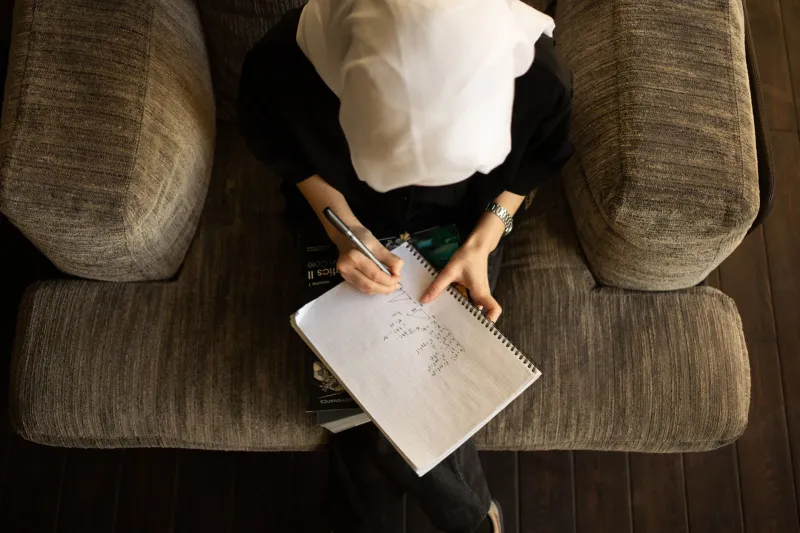
Same year, different room. I had a paperback and the back of a pharmacy receipt, and I wrote a paragraph there that survives, nearly unchanged, in the final manuscript. Here's what I learned: when your workspace is the back of a receipt, perfectionism can't keep up with you. There's no room to revise. You just say the true thing and move on.
4. My Kitchen, 2 a.m.
The 2 a.m. kitchen is a cliché, and like most clichés it earned its keep. The specific magic: the house is dark, the refrigerator hums, and your internal editor — that smug little intern who lives in your frontal lobe — is finally off shift. I've written some of my most honest letters at that counter. Morning-me usually finds them too raw to send. But the raw version is always the true version, and I've learned to steal from it.
5. A Greyhound Somewhere Outside Reno
I wrote nothing usable on this bus. But I filled eleven pages of a notebook with the worst, most overwrought prose of my life, and buried in page nine was a single image — dust, a fence post, a woman's hand on glass — that I've used three times since. Sometimes the bad room isn't where the sentence gets written. It's where it gets found, in the wreckage of everything else you wrote around it.
What All Five Rooms Had in Common
Not quiet. Not comfort. Not coffee, though there was coffee.
What they had was displacement. In each one, I was slightly out of place, slightly on someone else's clock, and therefore released from the performance of Being a Writer at My Desk. The desk invites ambition. The laundromat, the waiting room, the parked car — they invite attention.
I still sit at the oak desk most mornings. Habit is its own kind of loyalty. But I've stopped believing the desk is where the work lives. The work lives wherever you happen to be when you stop performing and start noticing.
So here's my assignment for you, and for myself: this week, write one paragraph somewhere you have no business writing. Tell me where. I'll tell you if the sentence was any good — mine usually aren't, in those rooms. But once or twice, they've been the only ones worth keeping.